Meta · AI Native Tools · Future of Work
AI Meeting Notes
I led AI Meeting Notes across conference rooms and personal computers, designing for control, transparency, and provenance so the AI earns trust. On that foundation, I shipped a 0→1 agent system that turns every meeting into structured notes people can find in seconds and agents can act on automatically.
Situation
Designing across the in-room and online ecosystem
Notes only matter if people act on them. Past bugs and accuracy issues had taught people the tool couldn't be trusted, so notes got taken but nothing moved. I named that trust deficit before leadership asked and resequenced the roadmap around it.
Task
The strategy: earn trust first
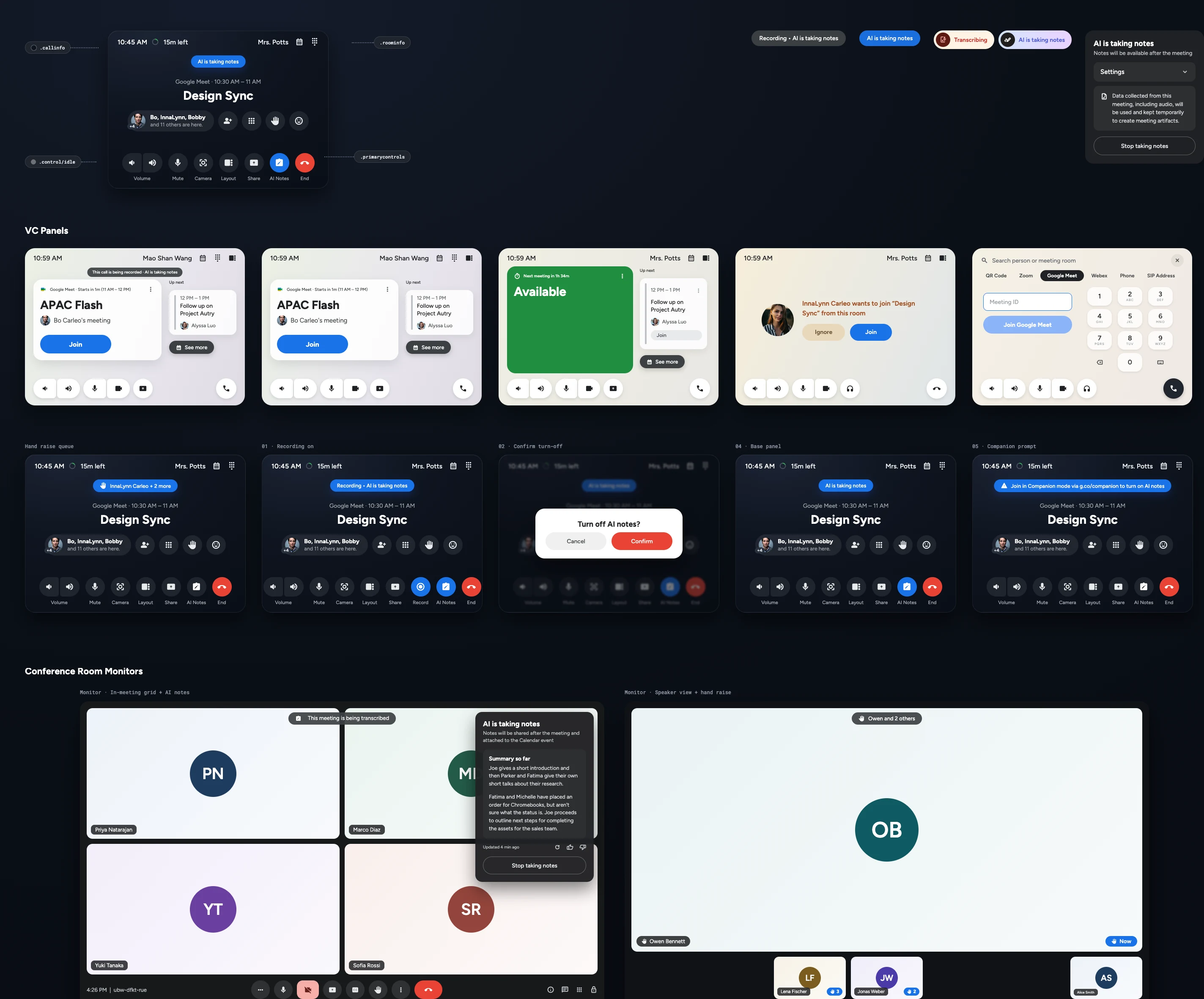
Nothing could ship until reliability and provenance were proven. People were also wary of AI listening in, so rather than gate every meeting behind explicit consent prompts, I made transparency constant: one consistent indicator shows when notes are on, so everyone stays aware and in control without added friction. Trust was the first deliverable, automation last.
- Onboarding flow redesign scope
- Mobile navigation patterns
- Ship the onboarding redesign in Q3
- Make bottom-nav the mobile standard
- Defer the VC-panel CTA fix to next sprint
- Reading the meeting notes
- Drafting the leadership deck
- Running a skill to finish it
Action
Integrating into the existing conference room ecosystem
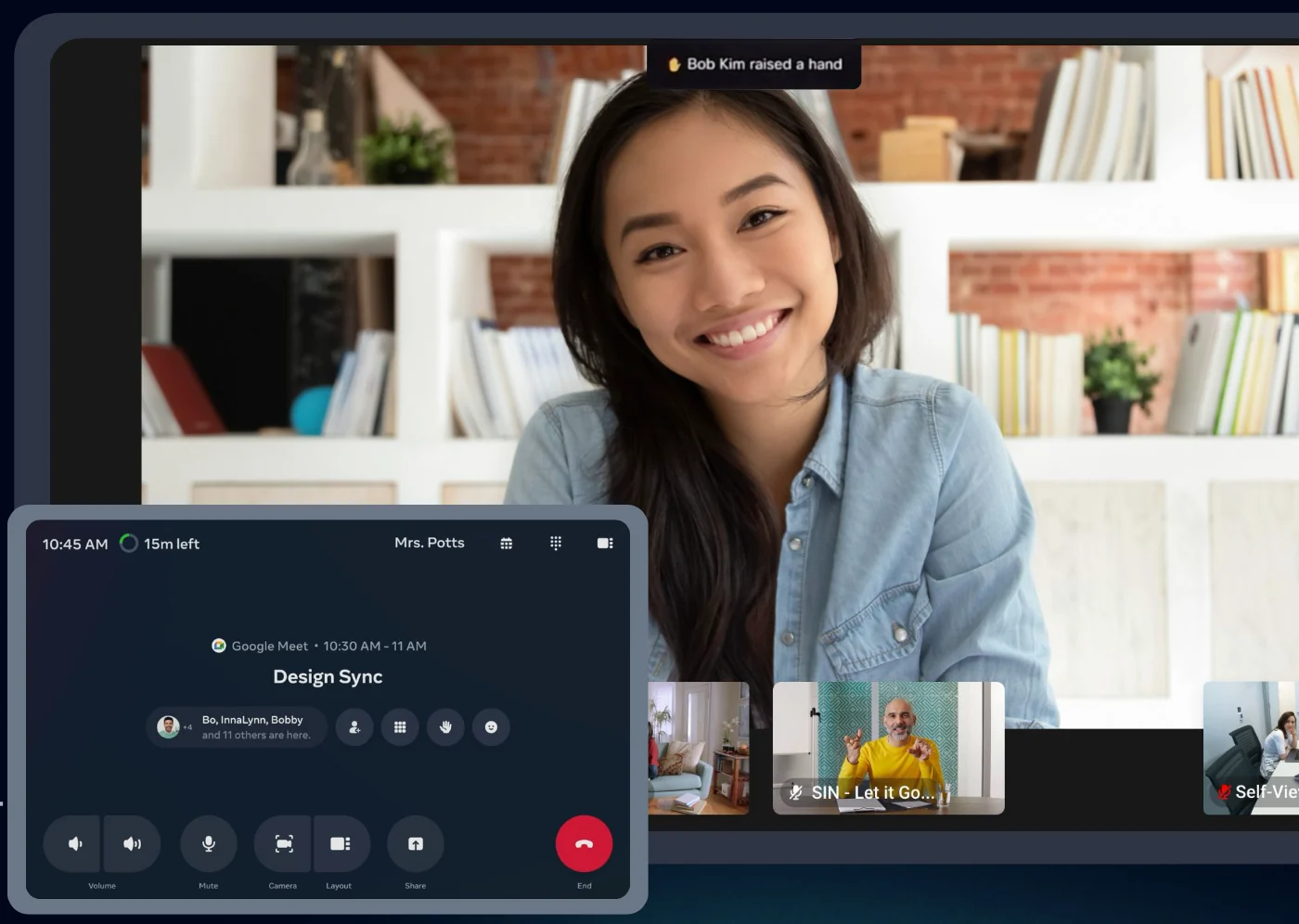
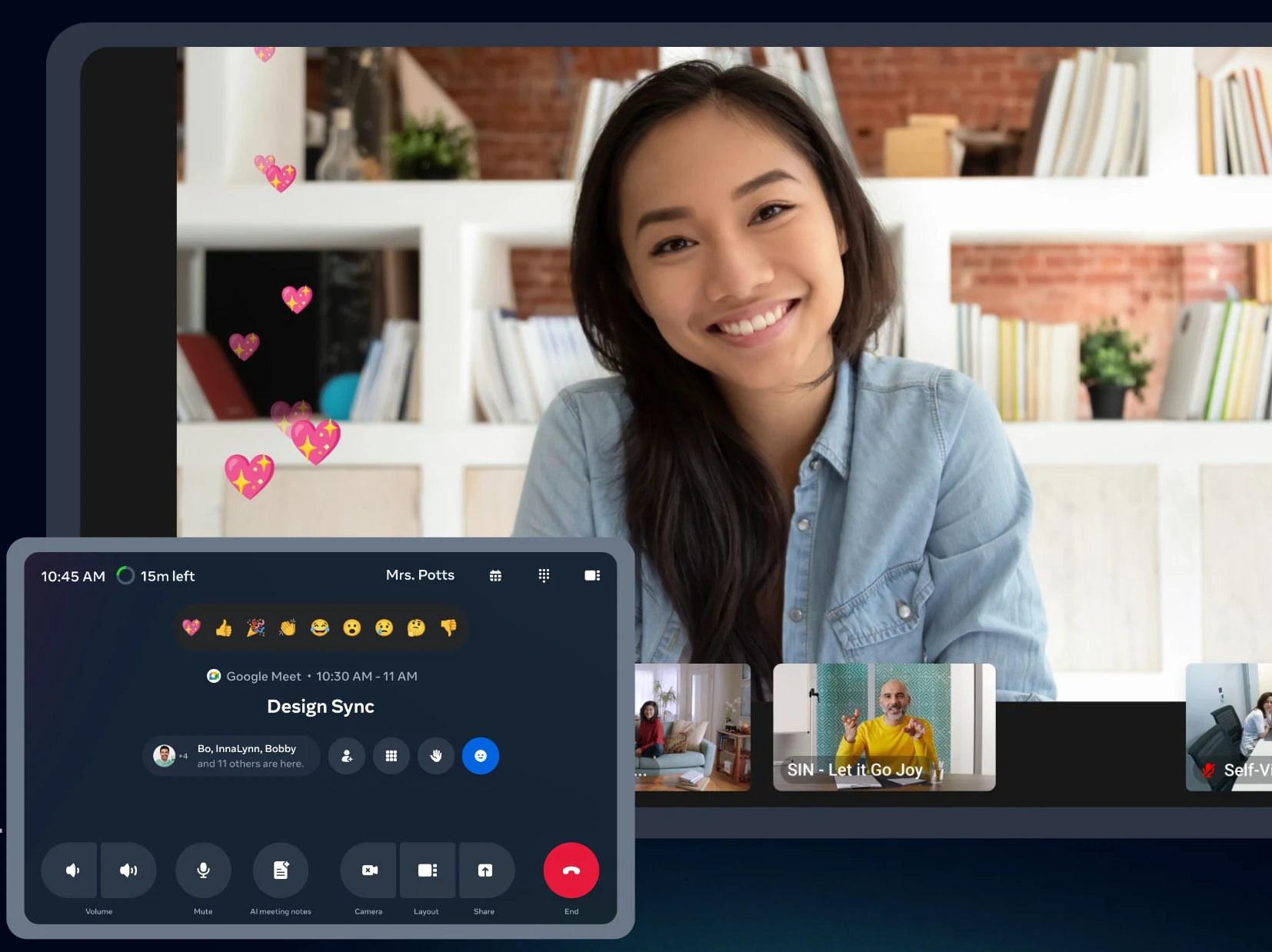
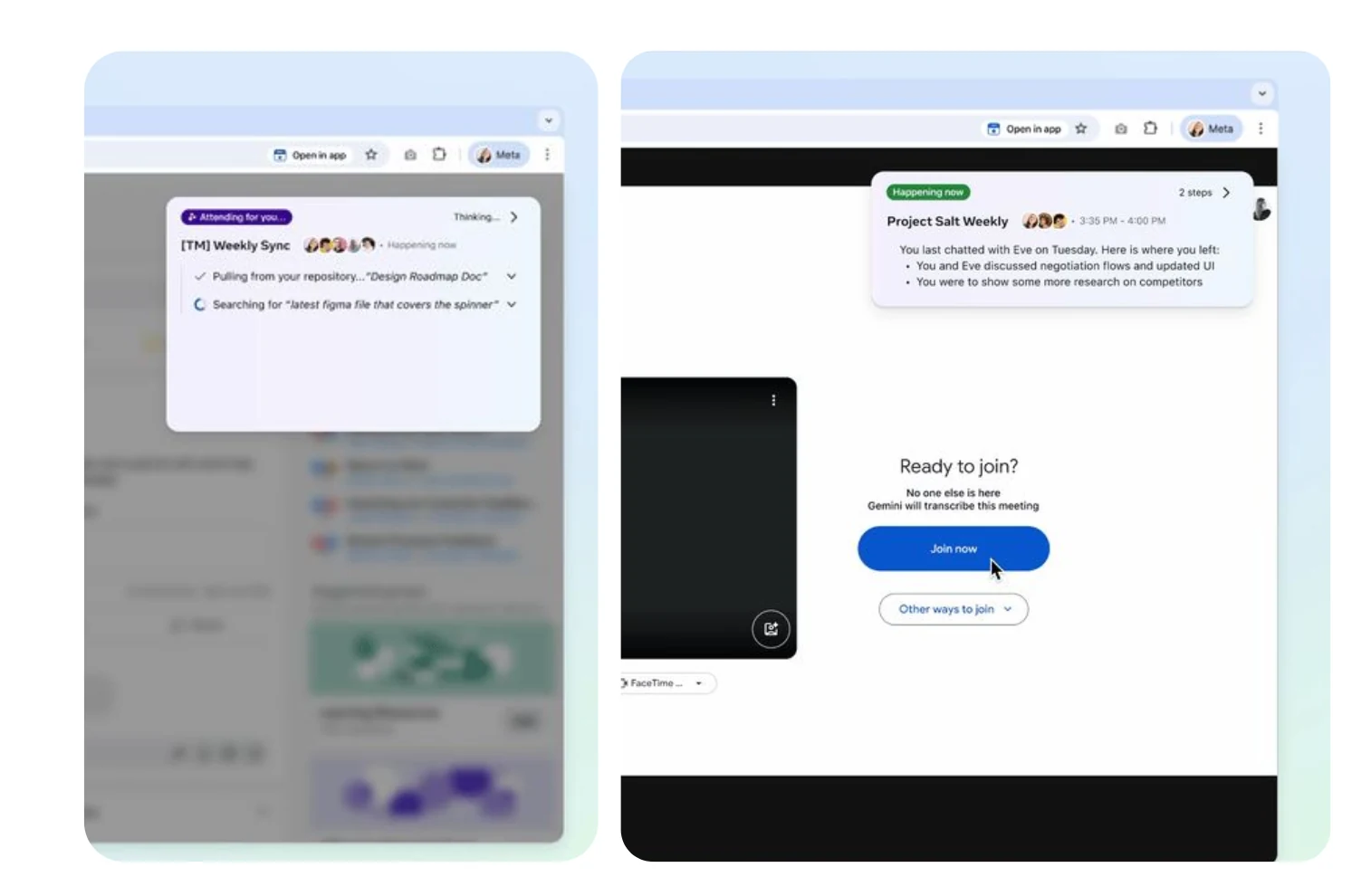
People meet in Zoom, Google Meet, and WebEx, so I kept the UX identical across all three and built interop with Cisco hardware. Reactions, raised hands, and a live queue keep participation visible, and Companion Mode turns any laptop or phone into a second device so each person in the room is recognized.
The payoff, delivered
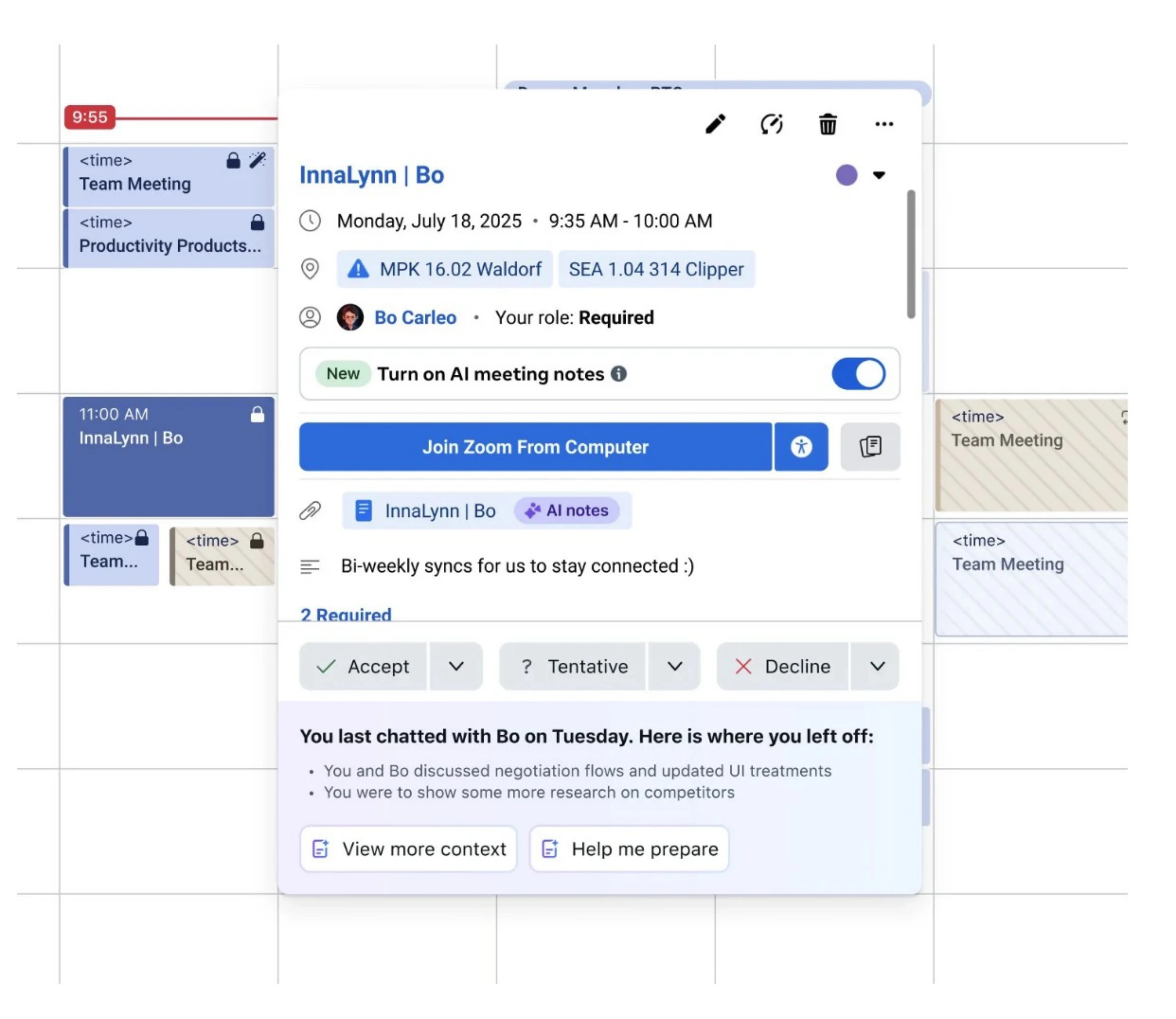
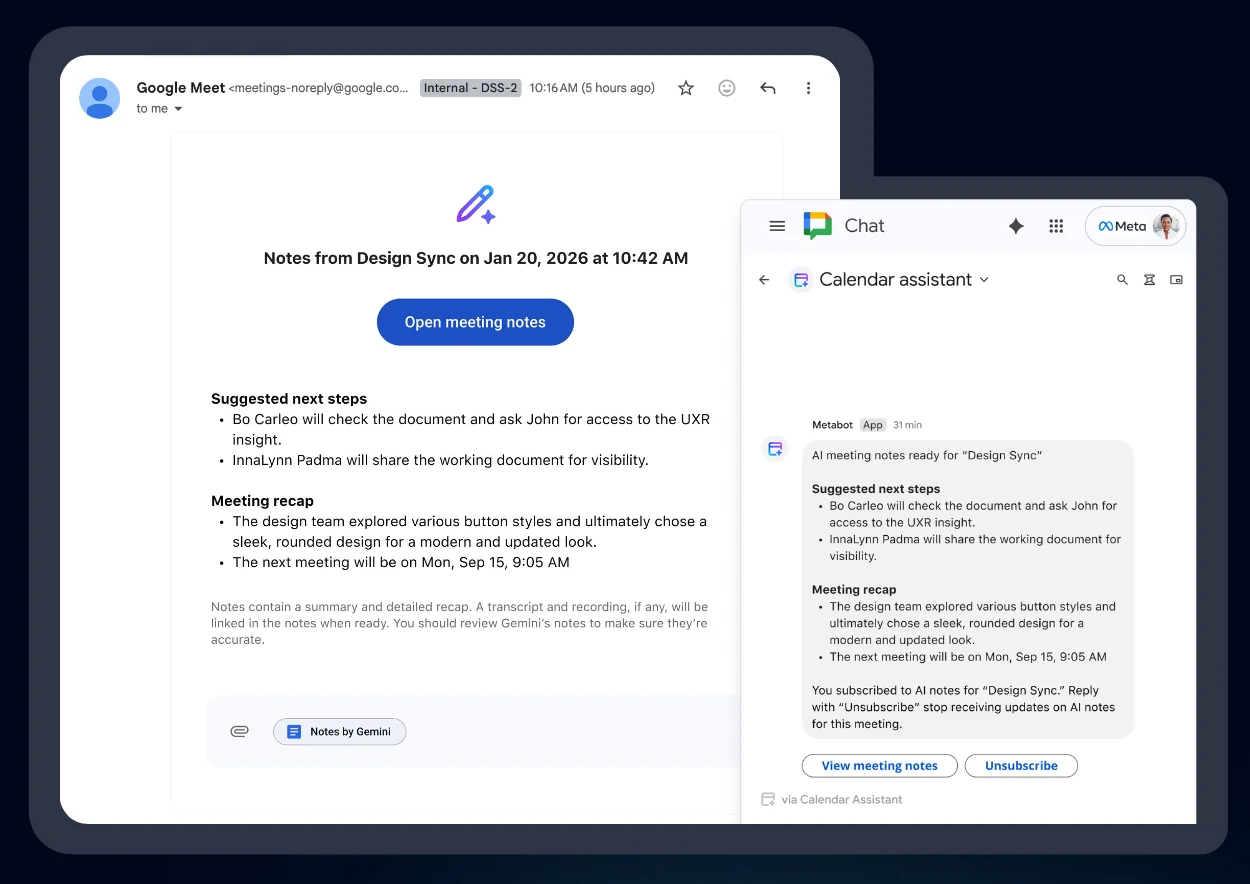
AI Notes meets people where they already are, on their calendar and in Chat, helping them prepare before a meeting and follow up after:
- One Google Doc holds the full record: summary, details, next steps, transcript alongside.
- The recap comes to you in email and Chat, so no one has to open the doc.
- Locked down: no copy, download, print, or external share; auto-deletes after six months.
Notes become agent actions
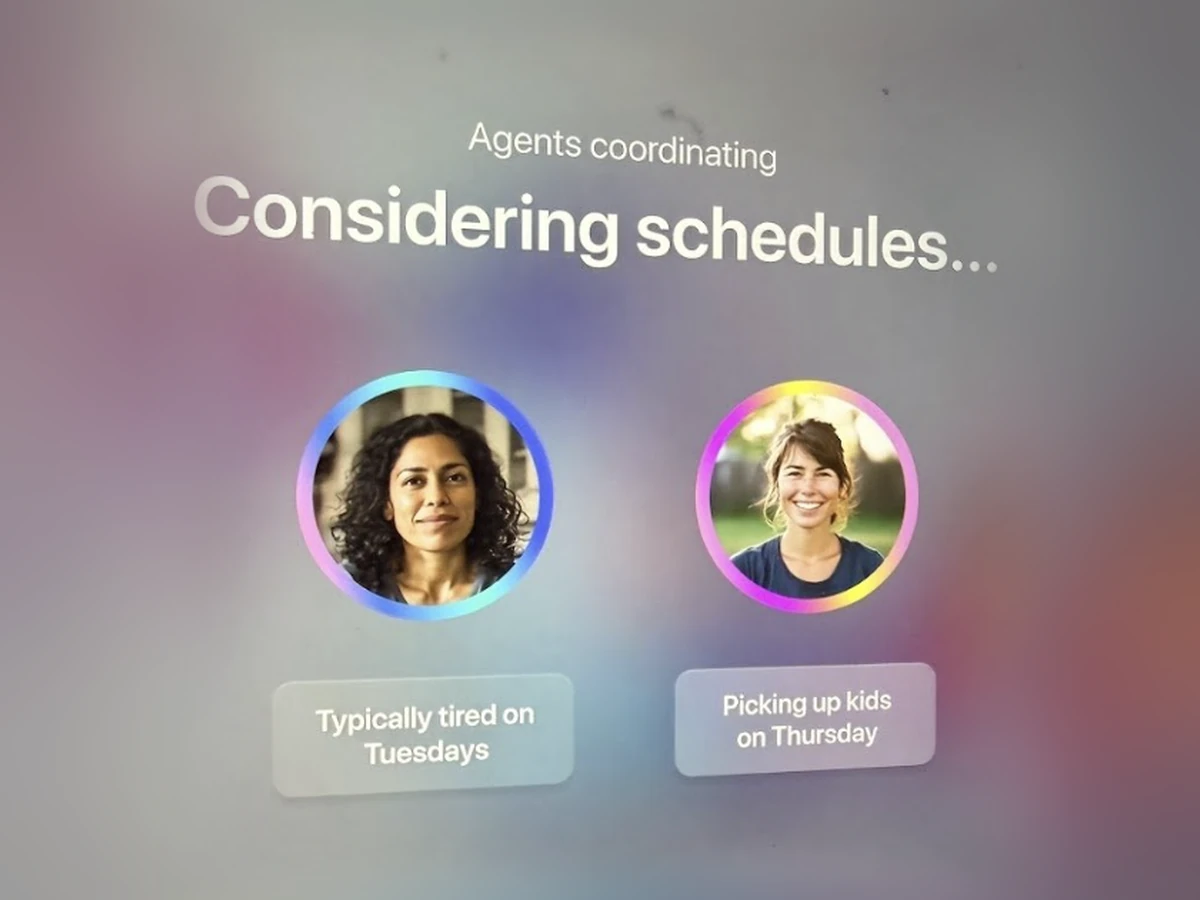
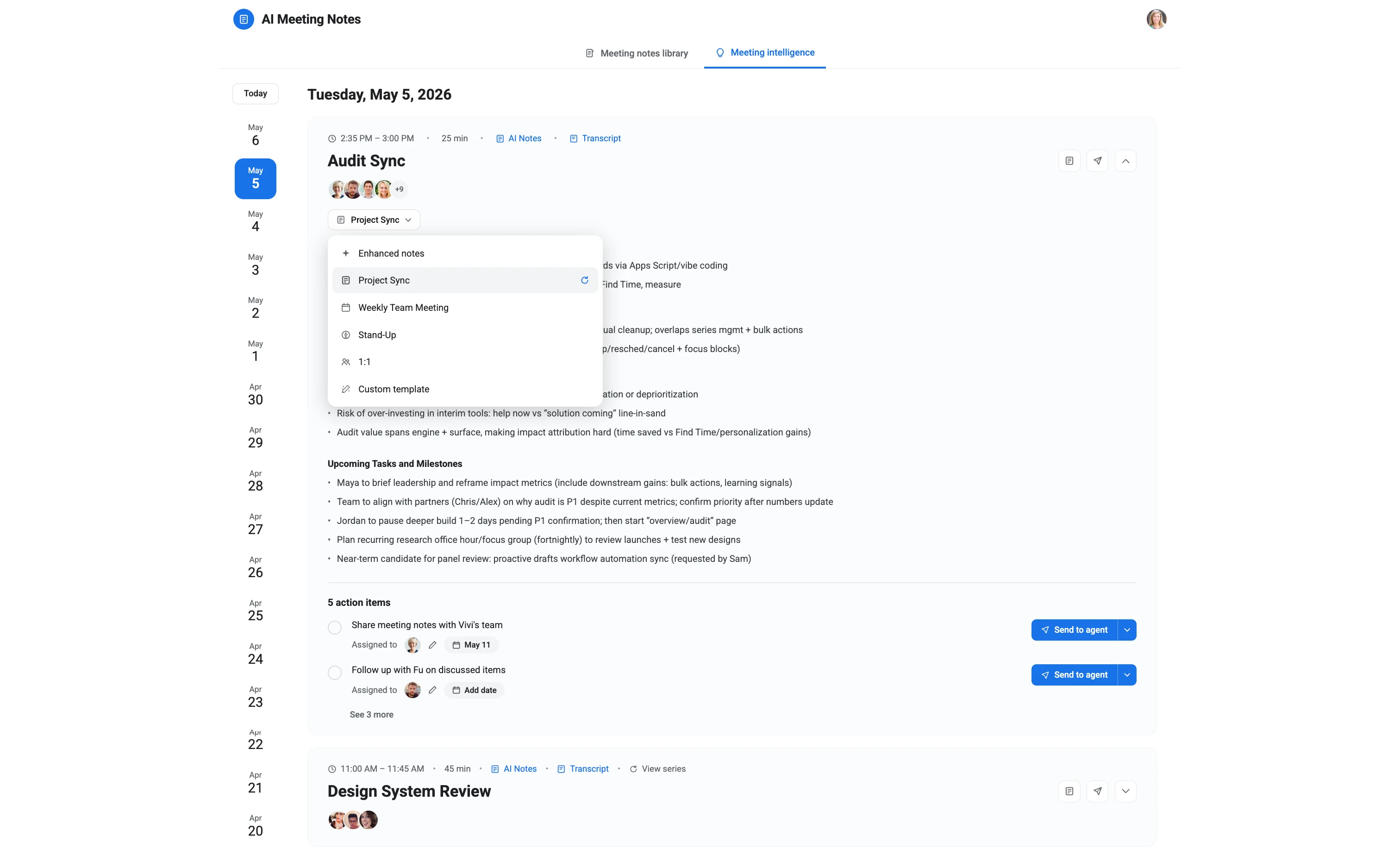
Notes are structured the way people think, with decisions and action items pulled out, trustworthy at a glance and readable by both the person and the agent that acts on them. Each item hands off to an agent in one click, assignee and due date set, all logged in an auditable repository.
The agent explains each step in plain language, keeps an auditable trail, pauses for confirmation when needed, and pings you when done.
Feedback loop
A 171-person cohort gave ongoing feedback across the ecosystem. Response ran positive across roles, and requests fed straight into the roadmap.
Latest
Meeting Intelligence is magical. In the age of infinite AI productivity tools, this one really works and is super useful. Whoever's building it, you're doing a terrific job. Within 5-10 minutes of a meeting ending I get a crisp, accurate summary, faster than my own second brain, plus curated action items I'd otherwise miss. Highly recommend.
Meta employee · internal feedback
"I use meeting notes to track takeaways and for strategic discussions. I take the notes, build strategies, research against them, and build programs to implement."
"I find it incredibly useful to go back and retrieve discussions. This is one of my favorite AI use cases. It makes life much easier."
"Absolutely love the AI meeting notes and transcripts. Very interested to learn how transcripts can be leveraged into automated workflows."
Reflection
Where I held the line
Shipping default-on meant winning four hard calls. I brought each to review with a recommendation; all four were accepted.
- No consent gate, a persistent “AI is taking notes” indicator instead.
- One doc for transcript and summary, protected by DLP.
- Build inside the tools people already use, Zoom, Meet, and WebEx, instead of a standalone app, even though the interop cost more.
- Summaries in context, so people prepare pre-meeting and stay informed after, across calendar, chat, and email.
What I got wrong
Consent as a gate. I first gated notes behind a per-meeting consent prompt. It added friction, people switched notes off to avoid it, and adoption stalled. That's what pushed me to a persistent indicator instead of a gate.
Leading with the summary. I first led with the summary and buried the transcript. When people caught it missing a decision, they stopped trusting all of it. I made the transcript first-class, one tap away, not an afterthought.
What I learned
Trust is earned before it's automated. When adoption stalled, shipping reliability first was the fix. Everything else worked only once people believed the tool.
The model captures what was said, not what mattered. So it never acts on its own: every action waits for human confirmation, transcript beside the summary.
Results
From the field
"AI meeting transcripts have been one of the biggest unlocks for my productivity."